
Hello, it’s Clara here! I’m so excited to share something that will seriously spice up your family meals: homemade hot sauce. Yes, you heard right! Ditching store-bought bottles for a flavor-packed, totally customizable sauce is simpler than you might think. My recipe is beginner-friendly, with a total fermentation and cook time of just about a week. But trust me, the vibrant flavors you create are SO worth the wait. Plus, I’ll walk you through all sorts of flavor customizations, so you can find your perfect zing. Let’s get started!
Table of contents
Table of Contents
Why Make Homemade Hot Sauce?
Why should you even bother making homemade hot sauce? Well, let me tell you, it’s a game-changer.
- Customize the Heat: Crave a mild tingle or a fiery inferno? With homemade hot sauce, you control the pepper blend and spice level.
- Fresher Flavor: Say goodbye to that artificial taste. I use fresh ingredients, so every drop bursts with vibrant, natural flavors.
- No Weird Additives: Ditch the preservatives and mystery ingredients! My recipe uses simple, wholesome ingredients that you can actually pronounce.
- Cost-Effective: Once you have your basic supplies, making hot sauce at home is surprisingly budget-friendly, and cheaper than buying fancy hot sauces at the store.
The Essential Ingredients for Homemade Hot Sauce
Here’s what you’ll need to whip up a batch of my amazing hot sauce:
- 226g (8oz) chili peppers, tops removed and coarsely chopped
- 2-3 garlic cloves, peeled
- 6g (1 tsp) coarse kosher salt\*
- 1/4 cup water
- 1/4 cup apple cider vinegar
Choosing Your Peppers: A Scoville Scale Guide
The key to amazing homemade hot sauce is choosing the right peppers! Here’s a rundown to guide you:
Mild:
- Poblano: (1,000-2,000 SHU) Earthy and mild, perfect for adding depth without too much heat. Great roasted or stuffed!
- Anaheim: (500-2,500 SHU) Slightly sweet and mild, ideal for a very gentle heat. Delicious in salsas and for roasting.
Medium:
- Jalapeño: (2,500-8,000 SHU) A classic choice, offering a balanced heat and slightly grassy flavor. Perfect for everyday hot sauce.
- Serrano: (10,000-23,000 SHU) A step up in heat from jalapeño, with a bright, clean flavor. Use sparingly if you’re heat-sensitive.
Hot:
- Cayenne: (30,000-50,000 SHU) Pungent and fiery, these are great dried and powdered for adding serious heat.
- Habanero: (100,000-350,000 SHU) Fruity and intensely hot. Handle with care! Perfect for those who love serious heat.
- Ghost Pepper (Bhut Jolokia): (800,000 – 1,041,427 SHU) Extremely hot.
Safety First: Always wear gloves when handling hot peppers, and work in a well-ventilated area. Trust me, you don’t want to accidentally rub your eyes!
Step-by-Step Instructions for Perfect Homemade Hot Sauce
Alright, let’s get cooking! Here’s how to make my easy homemade hot sauce:
- Add the peppers, garlic cloves, salt, and water in a food processor. Process until you reach the texture of a chunky salsa.
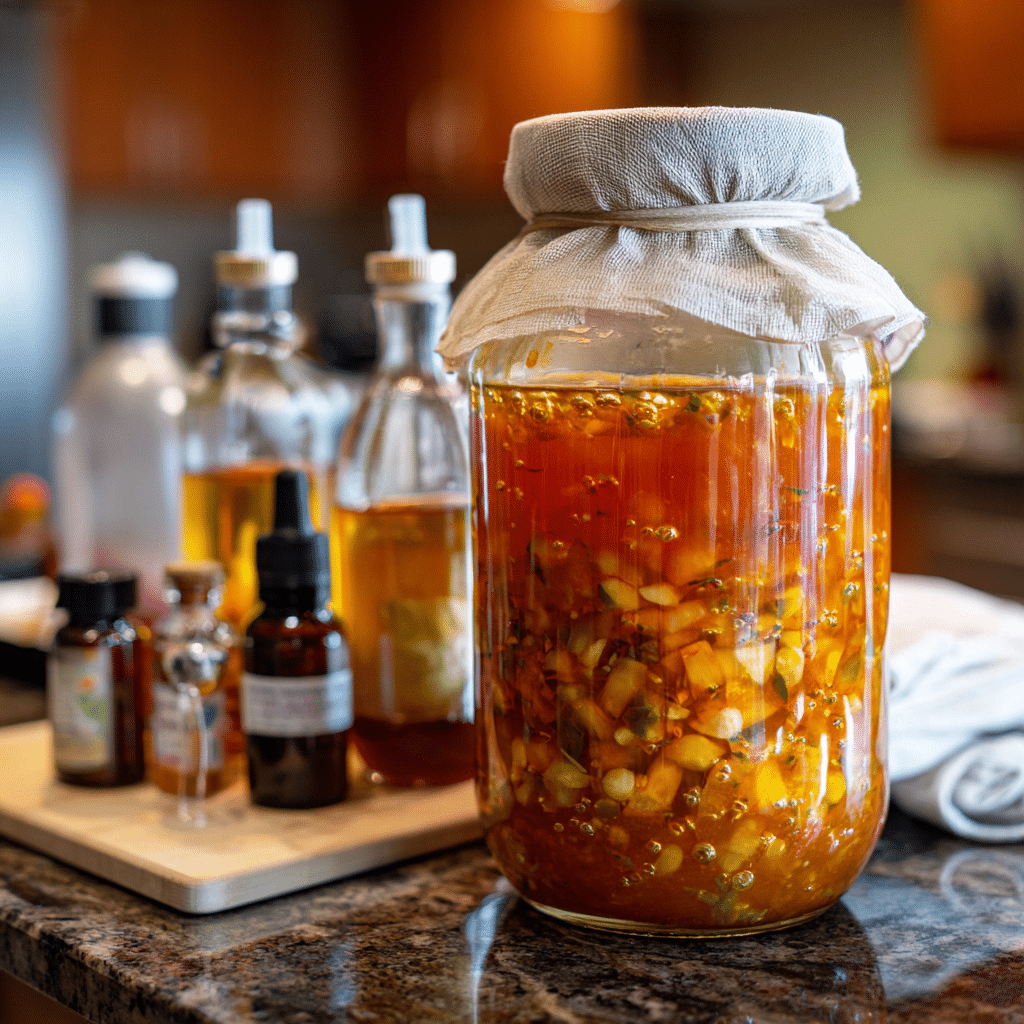
- Transfer to a clean glass container and cover with a cheesecloth. Leave on the counter at room temperature for 24-48 hours.
- After 1-2 days, stir in the apple cider vinegar. Leave on the counter, covered with a cheesecloth for 5-7 days (if you have time, go the full week!).
- After 1 week, transfer to a blender and purée until smooth. If it’s very thick add more water (and/or vinegar to taste) to thin. Optional: strain the sauce through a mesh strainer or cheesecloth lined strainer. Squeeze out all the juice from the remaining pulp. Straining will make a thinner sauce, so wait to thin the sauce if you are straining it.
- Transfer to a clean jar or hot sauce bottle and refrigerate. It will last for several months.
- Separation is normal, shake before use.
Tips for Safe Fermentation
Fermentation is key to that amazing flavor, but safety is paramount! Make sure all your equipment is squeaky clean to prevent bad bacteria from taking over.
Look out for these signs of bad fermentation: mold (any color other than white), a truly repulsive smell (not just a strong, funky one), or any unusual slimy texture. If you see any of these, toss it out. It’s not worth risking your health!
For extra safety, you can test the pH of your fermented sauce with pH strips. You want a pH of 4.6 or lower for safe storage in the fridge.
Level Up: Homemade Hot Sauce Variations
Want to get creative? Here are a few fun ways to customize your homemade hot sauce:
Smoked Homemade Hot Sauce:
| Ingredient | Adjustment |
|---|---|
| Chili Peppers | Smoke peppers before processing. |
| Wood | Use hickory or applewood for best flavor |
Fruit-Based Homemade Hot Sauce:
| Ingredient | Adjustment |
|---|---|
| Chili Peppers | Reduce quantity slightly |
| Fruit | Add 1/2 cup chopped mango, pineapple, or peach |
Herb-Infused Homemade Hot Sauce:
| Ingredient | Adjustment |
|---|---|
| Herbs | Add 1/4 cup chopped fresh herbs |
| Options | Cilantro, oregano, or thyme |
Troubleshooting Your Homemade Hot Sauce
Oops, did something go wrong? Don’t worry, I’ve got you covered!
- Too hot: Add more vinegar or a touch of sweetener like honey or agave.
- Too mild: Add more hot peppers or a pinch of cayenne powder.
- Too thick: Thin with water or vinegar until you reach your desired consistency.
- Too thin: Simmer the sauce in a saucepan over low heat to reduce it.
- Too bitter: A tiny pinch of sugar or a squeeze of lime juice can balance the bitterness.
- Too sour: Add a pinch of salt or a touch of sweetness.
Essential Equipment for Homemade Hot Sauce
Here are a few tools that will make your hot sauce journey a breeze:
- Food Processor: I love my KitchenAid food processor for its power and versatility.
- Blender: A high-speed blender like a Vitamix will give you the smoothest sauce.
- Glass Jars: Mason jars are perfect for fermenting and storing your hot sauce.
- Cheesecloth: Essential for covering your fermenting sauce.
- Fermentation Weights: Glass weights help keep your peppers submerged in the brine.
- Hot Sauce Bottles: Swing-top bottles are great for serving your homemade creation.
Serving Suggestions: What to Put Your Homemade Hot Sauce On
The possibilities are endless! Hot sauce can elevate everything from your morning eggs to your delicious lunch options.
- Citrus-based hot sauce: fish tacos.
- Smoky hot sauce: BBQ.
Storing Your Homemade Hot Sauce
Your homemade hot sauce will last for several months in the refrigerator. Just make sure to store it in a clean, airtight jar or bottle. If you want to make it shelf-stable, you’ll need to follow proper canning methods using a pressure canner.

Amazing Homemade Hot Sauce: Easy & Flavorful
Ingredients
Equipment
Method
- Add the peppers, garlic cloves, salt, and water in a food processor. Process until you reach the texture of a chunky salsa.
- Transfer to a clean glass container and cover with a cheesecloth. Leave on the counter at room temperature for 24-48 hours.
- After 1-2 days, stir in the apple cider vinegar. Leave on the counter, covered with a cheesecloth for 5-7 days (if you have time, go the full week!).
- After 1 week, transfer to a blender and purée until smooth. If it’s very thick add more water (and/or vinegar to taste) to thin. Optional: strain the sauce through a mesh strainer or cheesecloth lined strainer. Squeeze out all the juice from the remaining pulp. Straining will make a thinner sauce, so wait to thin the sauce if you are straining it.
- Transfer to a clean jar or hot sauce bottle and refrigerate. It will last for several months.
- Separation is normal, shake before use.
Notes
Frequently Asked Questions
What is the best vinegar to use for homemade hot sauce?
Apple cider vinegar is my go-to, but white vinegar, rice vinegar, or even lime juice work well.
How long does homemade hot sauce last?
Several weeks in the fridge.
Do you have to ferment homemade hot sauce?
No, but I highly recommend it! Fermentation adds depth and complexity to the flavor.
How do you make homemade hot sauce less sour?
Add a pinch of salt or a touch of sweetness.
How do you make homemade hot sauce hotter?
Use hotter peppers or add cayenne powder.
Can you use dried peppers for homemade hot sauce?
Yes! Rehydrate them in hot water before using.
Conclusion
See? Making homemade hot sauce is totally doable, and the flavor possibilities are endless. Don’t be afraid to experiment with different peppers, fruits, and herbs to create your signature sauce. Now, I want to hear from you! What are your favorite hot sauce flavor combinations? Leave a comment below and let’s chat! And if you try this recipe, be sure to share your results with me. I can’t wait to see what you create!