
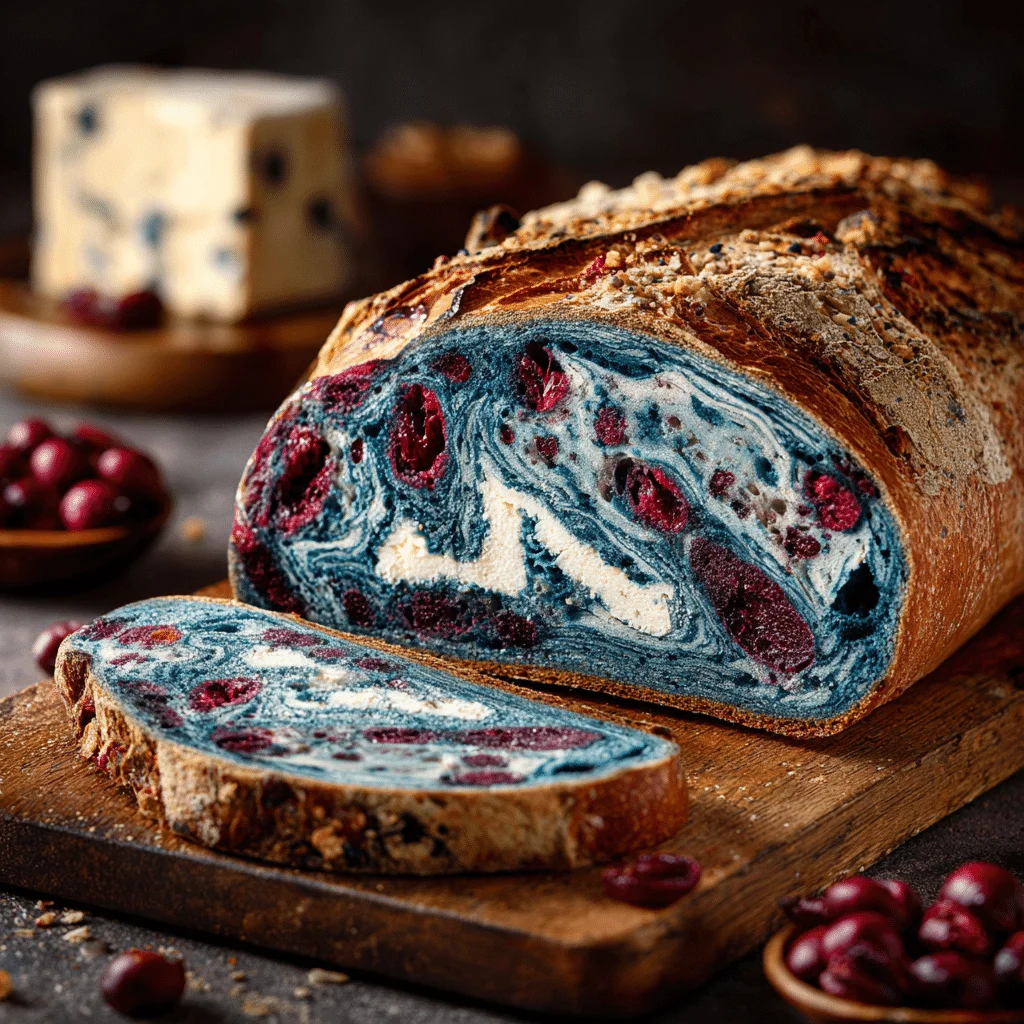
Hello, friends! Clara here, ready to share one of my absolute favorite sourdough recipes with you: Cranberry Goat Cheese Sourdough. I still remember the first time I tried sourdough; it was a complete revelation. The tangy flavor, the chewy texture, the sheer magic of creating something so amazing from just flour, water, and salt. I’ve been hooked ever since. I’ve spent years experimenting with flavors, and this Cranberry Goat Cheese Sourdough is a real winner. And with a total time commitment of about 24 hours, most of which is hands-off, even the busiest among us can enjoy this delightful bread.
Table of contents
Table of Contents
Why You’ll Love This Cranberry Goat Cheese Sourdough
- Flavor Explosion: The tang of sourdough perfectly complements the creamy goat cheese and sweet cranberries. It’s a match made in heaven!
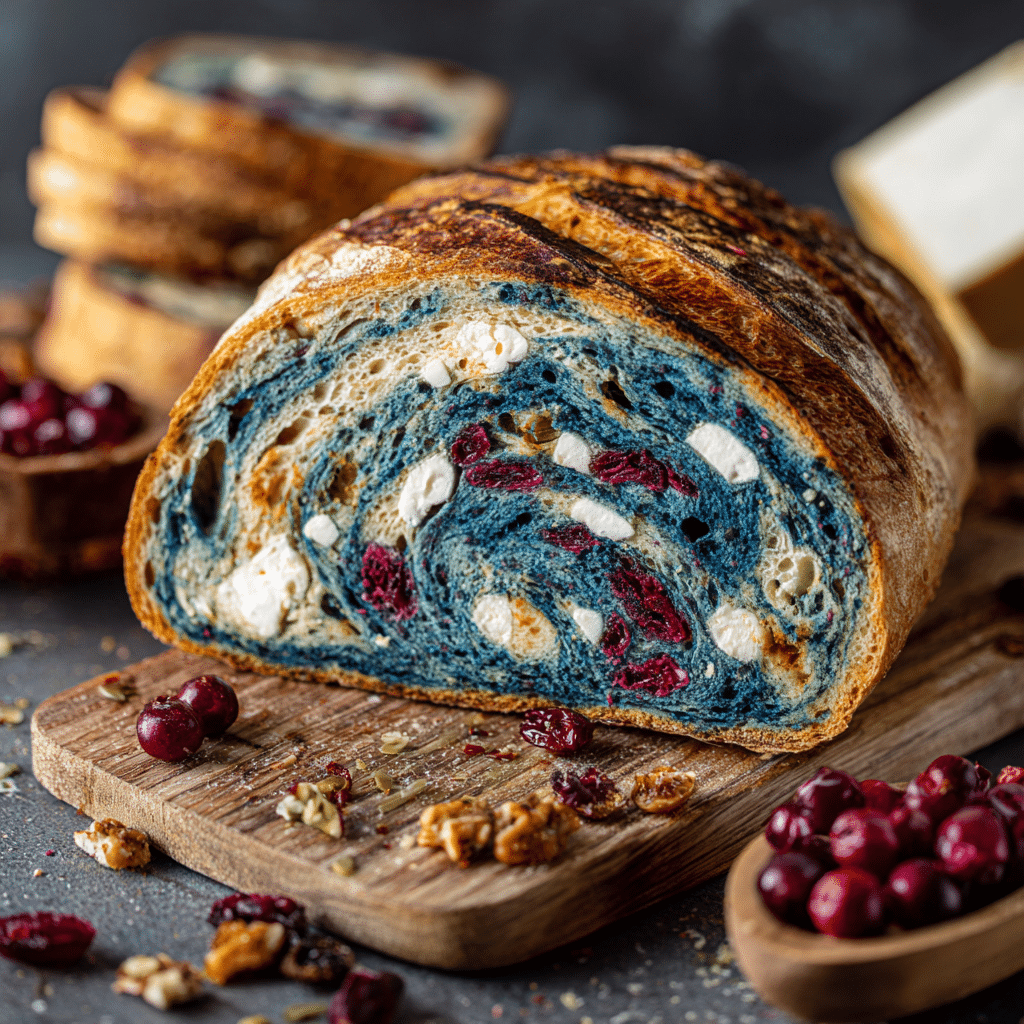
- Stunning Presentation: The beautiful blue hue from the butterfly pea powder, combined with the pops of red from the cranberries, makes this bread a showstopper.
- Perfect for Sharing: This sourdough is guaranteed to impress at any gathering, from casual brunches to holiday dinners.
- Beginner-Friendly: Even if you’re new to sourdough baking, this recipe is designed to be straightforward and fun. I’ll guide you every step of the way!
Ingredients for Cranberry Goat Cheese Sourdough
- 80 grams active, bubbly starter: This is the heart of your sourdough, providing the leavening power and characteristic tang. I always make sure mine is nice and active before starting.
- 360 grams filtered water: Water is essential for hydration and helps create the perfect dough consistency. Filtered water ensures there are no unwanted flavors interfering with your bread.
- 500 grams unbleached all-purpose flour: This forms the structure of your bread. I prefer unbleached for its natural flavor and texture.
- 9 grams salt: Salt enhances the flavor and controls the fermentation process. Don’t skip it!
- 12 grams butterfly pea powder for the blue color: This natural food coloring gives our bread a stunning blue hue. It’s optional, but highly recommended for the visual appeal.
- 4 oz wild blueberry goat cheese log from Trader Joe’s: This creamy, tangy cheese adds a burst of flavor and moisture to the bread. The wild blueberry flavor is simply divine.
- 1 food scale: Precision is key in baking, especially with sourdough. A food scale ensures you get the right ratios.
- 1 mixing bowl: You’ll need a good-sized bowl to mix your dough.
- 1 dough whisk: A dough whisk makes mixing the ingredients much easier and prevents the flour from clumping.
- 1 Dutch oven: This is essential for creating a steamy environment that helps the bread rise and develop a crispy crust.
- 1 bread lame: A bread lame is used to score the surface of the dough, allowing it to expand properly during baking.
- 1 bread mat or parchment paper: This makes it easy to transfer the dough to the Dutch oven without burning yourself.
Equipment Needed
- 80 grams active, bubbly starter
- 360 grams filtered water
- 500 grams unbleached all-purpose flour
- 9 grams salt
- 12 grams butterfly pea powder for the blue color
- 4 oz wild blueberry goat cheese log from Trader Joe’s
- 1 food scale
- 1 mixing bowl
- 1 dough whisk
- 1 Dutch oven
- 1 bread lame
- 1 bread mat or parchment paper
Prep Time, Cook Time, Total Time
- Prep Time: 30 minutes
- Cook Time: 46 minutes
- Total Time: ~24 hours (including bulk fermentation and proofing)
How to Make Cranberry Goat Cheese Sourdough: Step-by-Step Instructions
- In the morning, feed your starter.
- In the afternoon, when your starter has doubled in size, assemble your dough.
- Start by mixing together your bubbly starter and filtered water until a milky liquid forms. Add in flour and salt and mix together until a shaggy dough forms.
- Cover and let rest for one hour. After resting, pull the sides of the dough up and towards the middle, rotating the bowl each time until you get a semi – smooth dough ball.
- Cover and let rest. Perform 2 – 4 more stretch and fold/ coil folds every 45 minutes to 1 hour apart. On the last stretch and fold that you perform, add 12 grams of the butterfly pea powder and then do your stretch and fold. It may seem like there are some dry bits on the sides, or on the top. But that’s okay.
- Cover with a damp bowl cover/ tea towel and let rest on the counter over night to bulk ferment.
- In the morning, turn your dough over onto a clean workspace.
- Stretch the dough out into a square shape, careful not to rip the dough. Crumble small pieces off of the blueberry goat cheese log and evenly distribute them over the surface of the dough. Fold the left and right side up and towards the middle. Add more goat cheese. Finish folding the dough and shape it into the shape of your banneton (round – boule, oval – batard).
- If your dough is round, do the push and pull technique on your work bench. This creates tension so there is a nice oven spring, but also distributes the color so you get that really nice marbling on the inside.
- Place seam side up in the banneton, cover, and place in the fridge for at least two hours.
- When you’re ready to bake, preheat a Dutch oven at 475 degrees for at least 20 minutes. Remove the bread dough from the fridge and turn it over onto a bread mat, or piece of parchment paper.
- Score the surface of the bread, and carefully place the dough into your HOT Dutch oven. Replace the lid and bake at 475 for 23 minutes.
- Remove the lid, drop the oven temperature down to 450 degrees, and bake for another 23 minutes.
- Transfer the bread to a wire cooling rack and let cool completely before slicing and serving.
Tips and Tricks for Perfect Cranberry Goat Cheese Sourdough
To prevent soggy bread, ensure your starter is very active and bubbly before starting. A long, slow fermentation will also help develop a stronger gluten structure, which prevents the bread from becoming too moist. For a crispy crust, preheat your Dutch oven thoroughly and bake with the lid on for the first half of the baking time. Remove the lid for the second half to allow the crust to brown and crisp up. When scoring the loaf, use a sharp bread lame and make a single, deep slash across the surface. This will help control the expansion of the bread during baking. If you can’t find wild blueberry goat cheese, plain goat cheese works great too, or try adding a drizzle of honey.
Common Mistakes to Avoid
Avoid cutting the loaf too deep, as this can cause the filling to spill out. Over-baking the bread can result in a dry, tough crust. Keep a close eye on it during the last few minutes of baking. Using goat cheese that is too cold or too firm can make it difficult to distribute evenly throughout the dough. Let it soften slightly at room temperature before using. Make sure to distribute the filling evenly. This ensures every slice is packed with flavor!
Make Ahead Instructions
You can assemble the dough up to the point of shaping it and placing it in the banneton. Then, instead of refrigerating for just two hours, you can refrigerate it for up to 24 hours. This is a great way to break up the process and bake fresh bread whenever you need it!
Serving Suggestions for Cranberry Goat Cheese Sourdough
This bread is absolutely delicious on its own, perfect for breakfast, brunch, or a snack. It’s also a wonderful accompaniment to soups, salads, and cheese boards. I especially love serving it with a drizzle of honey or a side of fig jam.
How to Store Leftover Sourdough
To maintain freshness, store leftover sourdough in a bread bag or airtight container at room temperature. It will stay fresh for 2-3 days. You can also freeze slices of sourdough for longer storage. Just wrap them tightly in plastic wrap and place them in a freezer bag.
Cranberry Goat Cheese Sourdough Variations and Substitutions
| Ingredient | Substitution Options |
|---|---|
| Goat Cheese | Cream cheese, Boursin, or other soft cheese |
| Cranberries | Blueberries, raspberries, dried cherries |
| Butterfly Pea Powder | Food coloring, beet juice powder (adjust quantity for desired color intensity) |
| All-Purpose Flour | Bread flour (for a chewier texture), whole wheat flour (for a nuttier flavor) |
Nutrition Information
Approximately per serving: Calories: 250, Fat: 8g, Carbs: 40g, Protein: 8g. Note: This is an estimate and can vary based on specific ingredients and portion sizes.

Amazing Cranberry Goat Cheese Sourdough Bread
Ingredients
Equipment
Method
- In the morning, feed your starter.
- In the afternoon, when your starter has doubled in size, assemble your dough.
- Start by mixing together your bubbly starter and filtered water until a milky liquid forms. Add in flour and salt and mix together until a shaggy dough forms.
- Cover and let rest for one hour. After resting, pull the sides of the dough up and towards the middle, rotating the bowl each time until you get a semi – smooth dough ball.
- Cover and let rest. Perform 2 – 4 more stretch and fold/ coil folds every 45 minutes to 1 hour apart. On the last stretch and fold that you perform, add 12 grams of the butterfly pea powder and then do your stretch and fold. It may seem like there are some dry bits on the sides, or on the top. But that’s okay.
- Cover with a damp bowl cover/ tea towel and let rest on the counter over night to bulk ferment.
- In the morning, turn your dough over onto a clean workspace.
- Stretch the dough out into a square shape, careful not to rip the dough. Crumble small pieces off of the blueberry goat cheese log and evenly distribute them over the surface of the dough. Fold the left and right side up and towards the middle. Add more goat cheese. Finish folding the dough and shape it into the shape of your banneton (round – boule, oval – batard).
- If your dough is round, do the push and pull technique on your work bench. This creates tension so there is a nice oven spring, but also distributes the color so you get that really nice marbling on the inside.
- Place seam side up in the banneton, cover, and place in the fridge for at least two hours.
- When you’re ready to bake, preheat a Dutch oven at 475 degrees for at least 20 minutes. Remove the bread dough from the fridge and turn it over onto a bread mat, or piece of parchment paper.
- Score the surface of the bread, and carefully place the dough into your HOT Dutch oven. Replace the lid and bake at 475 for 23 minutes.
- Remove the lid, drop the oven temperature down to 450 degrees, and bake for another 23 minutes.
- Transfer the bread to a wire cooling rack and let cool completely before slicing and serving.
Notes
Frequently Asked Questions
Can I use fresh cranberries instead of dried?
While I prefer dried cranberries for their concentrated flavor and texture, you can use fresh cranberries. Just be sure to chop them finely and toss them with a little bit of flour to prevent them from making the dough too wet.
What kind of sourdough loaf works best?
Both boule (round) and batard (oval) shapes work well for this recipe. Choose whichever shape you prefer or that best fits your Dutch oven.
Can I make this without nuts?
Absolutely! This recipe is naturally nut-free.
Can I add herbs?
Yes, definitely! Fresh rosemary or thyme would be delicious additions. Just sprinkle them over the dough along with the goat cheese and cranberries.
What temperature should the goat cheese be for best spreading?
The goat cheese should be slightly softened at room temperature. This will make it easier to crumble and distribute evenly over the dough.
Can I use honey flavored goat cheese?
Yes, honey-flavored goat cheese would be a lovely addition! It will add a touch of extra sweetness to the bread.
Conclusion
Baking this Cranberry Goat Cheese Sourdough is more than just following a recipe; it’s about creating something beautiful and delicious with your own hands. I hope you’ll give this recipe a try and experience the joy of sourdough baking for yourself. Don’t be afraid to experiment and make it your own. Now, I’d love to hear from you! Leave a comment below and let me know how your bread turns out. Did you make any variations? Do you have any questions? Share a photo of your creation with me—I can’t wait to see what you bake! I’m here to help you every step of the way, so don’t hesitate to reach out. Happy baking!